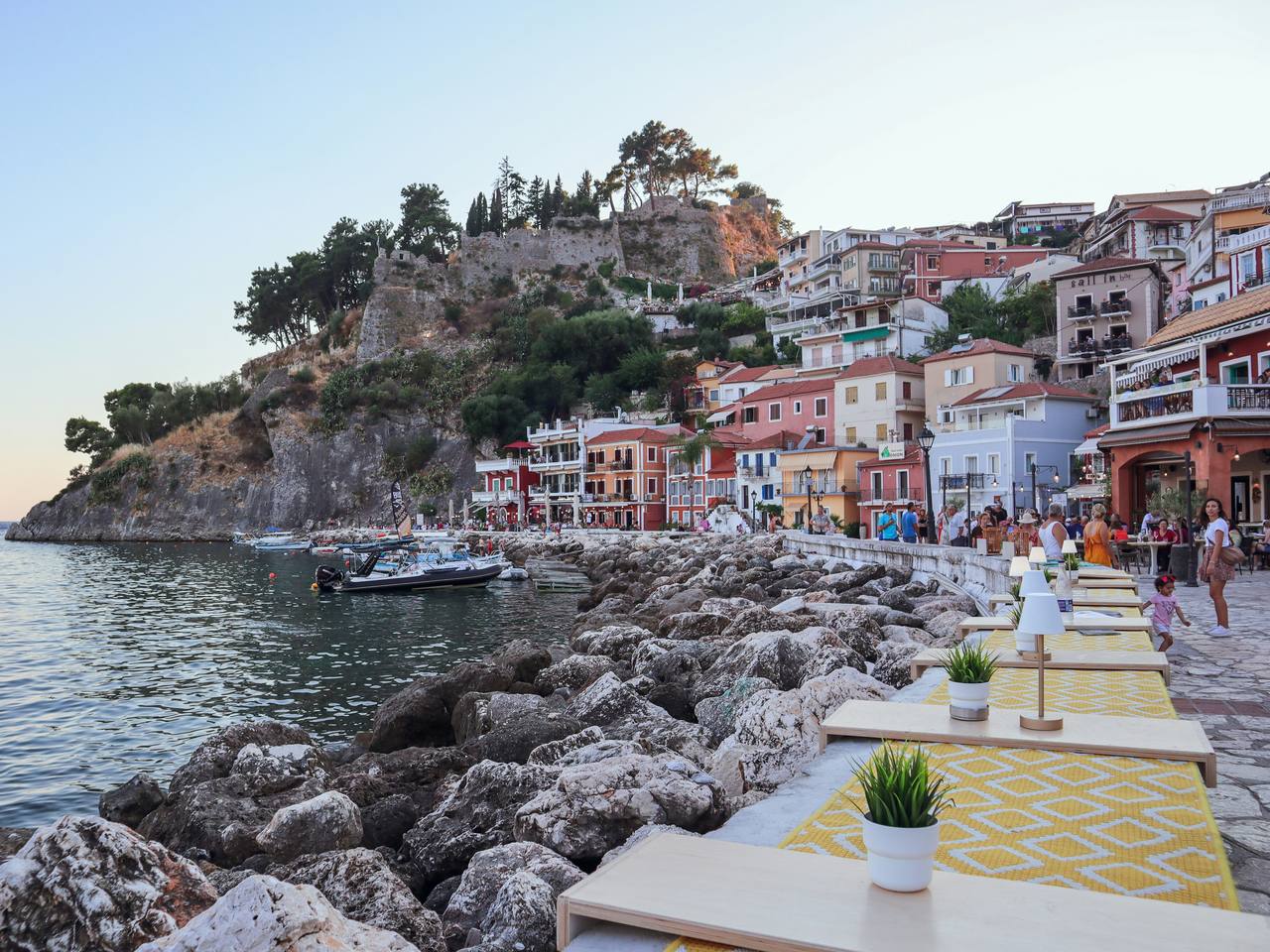
Hero image by Aleksandar Rusev on Unsplash.
I had not meant to get off the bus there. The plan was simple enough: stay in my seat, watch the coast unspool to the next larger town, find a pension with decent shutters and a late kitchen, and continue being the sort of traveler who confuses movement with progress. But somewhere after the third hairpin turn, just when the sea began flashing between stone pines like torn foil, the driver stopped in a harbor town whose pastel houses seemed stacked by a patient card player. Two boys were jumping from a low wall into water so clear it looked fictional. An old man in a linen cap was carrying figs in a crate. Before I could remind myself to be sensible, I had taken my bag down from the rack and stepped onto the hot pavement.
The town had one steep street pretending to be many. It climbed from the quay toward a ruined castle that watched the harbor with the relaxed suspicion of something that had outlived every empire around it. Laundry swayed between balconies. Cats slept under parked scooters. From a bakery near the church came the smell of sesame, yeast, and coffee dark enough to reset a life. I bought a spiral pastry I could not name and an espresso I did not deserve after the bus station machine, and the woman behind the counter nodded as if I had finally made a reasonable decision.
By noon I had drifted into the rhythm that only small ports seem to keep: boats arriving without drama, waiters polishing glasses long before anyone needed them, the steady clack of cutlery being set for an evening that everybody trusted would come. I followed the waterfront until the shops thinned and the path turned into pale stone. The sea was all silver scales and blue depth. A fisherman mending nets looked up once, told me in perfect English that the best swimming cove was “ten lazy minutes, or five honest ones,” and went back to his work.
The cove was worth every invented minute. It sat between two rocky shoulders with just enough beach for a towel, a paperback, and three opinions about the weather. I swam out until the town shrank into a toy theater behind me, then floated on my back while swallows stitched loops through the sky. Travel brochures always promise silence, but this place had something better: small honest sounds. Water folding against stone. A mast knocking gently in the harbor. Someone laughing far above on a terrace. The world had not gone quiet; it had simply become correctly proportioned.
That evening, after I found a room with blue shutters and a balcony barely wider than my shoes, I climbed to the castle. The whole town turned amber at sunset. Below, restaurant lights began coming on one by one, as if the harbor were being translated into another language. A woman tuning a radio in a nearby house found a station playing old Greek songs. On the square, children continued chasing each other long after their parents had surrendered to dinner. From up there it seemed obvious that the best places are not discovered through research but through interruption. They appear when a timetable loosens, when curiosity overrules efficiency, when you step off because something in the air insists.
I stayed three days instead of one night. I learned where to get tomatoes still warm from the sun, which pier had the coldest wind after dusk, and how the harbor looked just before morning when the fishing boats returned with lamps swinging like minor constellations. When I finally left, the bus climbed out of town and I could see the rooftops, the water, and the castle all at once. It looked impossibly arranged, like a memory improved by distance while still in view. I told myself I would come back with a plan next time, then laughed out loud at the idea. Some places are kind enough to greet you only when you arrive by accident.